Highlights
Some conversations feel urgent. Others feel necessary. This one felt foundational.

Care is infrastructure, not charity
Care is not a side system. It is the foundation beneath every other system. When food access, elder care, or housing stability fail, the broader economy strains. Designing for care means designing for resilience.
Poor design exhausts the vulnerable
Fragmented systems force people to navigate complexity when they have the least capacity to do so. Life-centred design reduces friction. It meets people where they are.
Dignity is a design decision
A locking door. A table to eat at. A doctor who comes to your home. These are not luxuries. They are design choices that signal whether a system sees people as whole human beings.
Our systems were built for a different time
Healthcare, housing, and community infrastructure were built for realities of another era. Today’s demographic and social pressures demand structural redesign, not surface fixes.
Smaller, community-integrated models may be more humane
Home-based care. Market-style food banks. Distributed micro-housing. The evening suggested that smaller, integrated solutions can restore agency and belonging in ways large centralized systems often cannot.
Designing for What Actually Holds Us Together
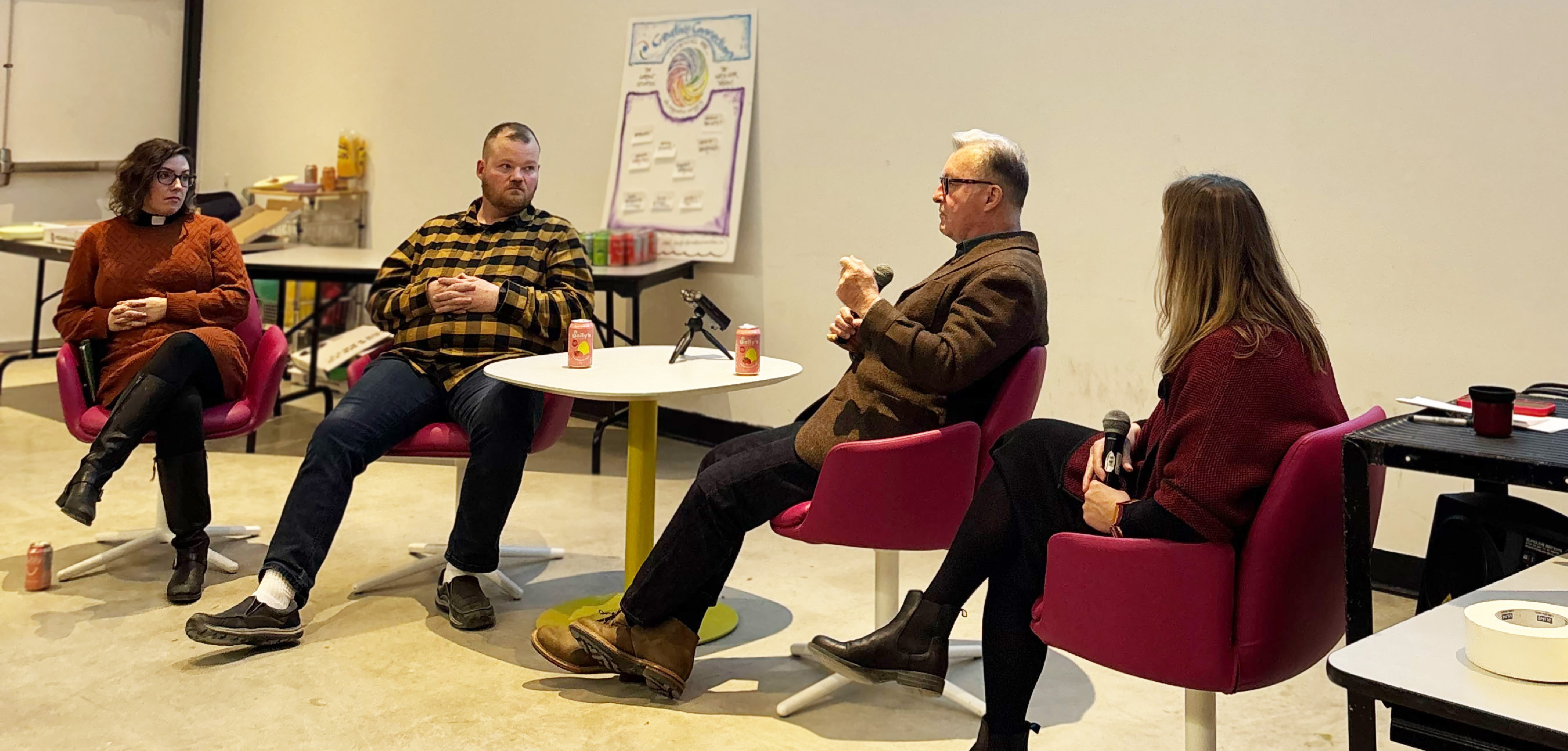
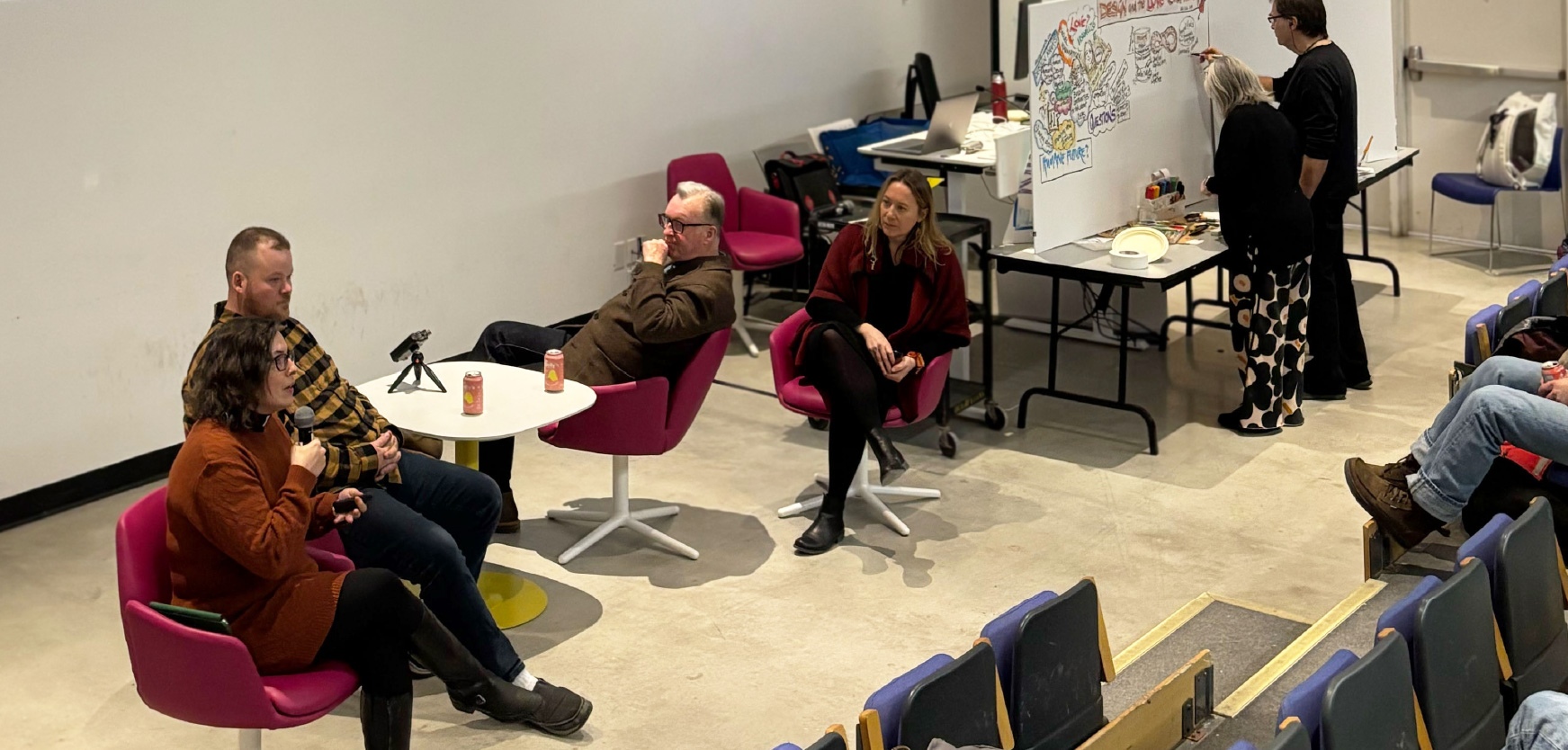
What if the most important parts of our economy are the ones we barely acknowledge? That in a nutshell was the deceptively simple question moderator Sarah Tranum, Associate Professor of Social Innovation Design, posed to the panel — Rev. Bri-anne Swan, Dr. Mark Nowaczynski and Ryan Donais — in exploring how design intersects with care, with love, in food systems, elder care, and housing.
If there was one thread running through the evening, it was this: the systems we rely on were not designed with ‘love’ at the centre.
Love as Infrastructure
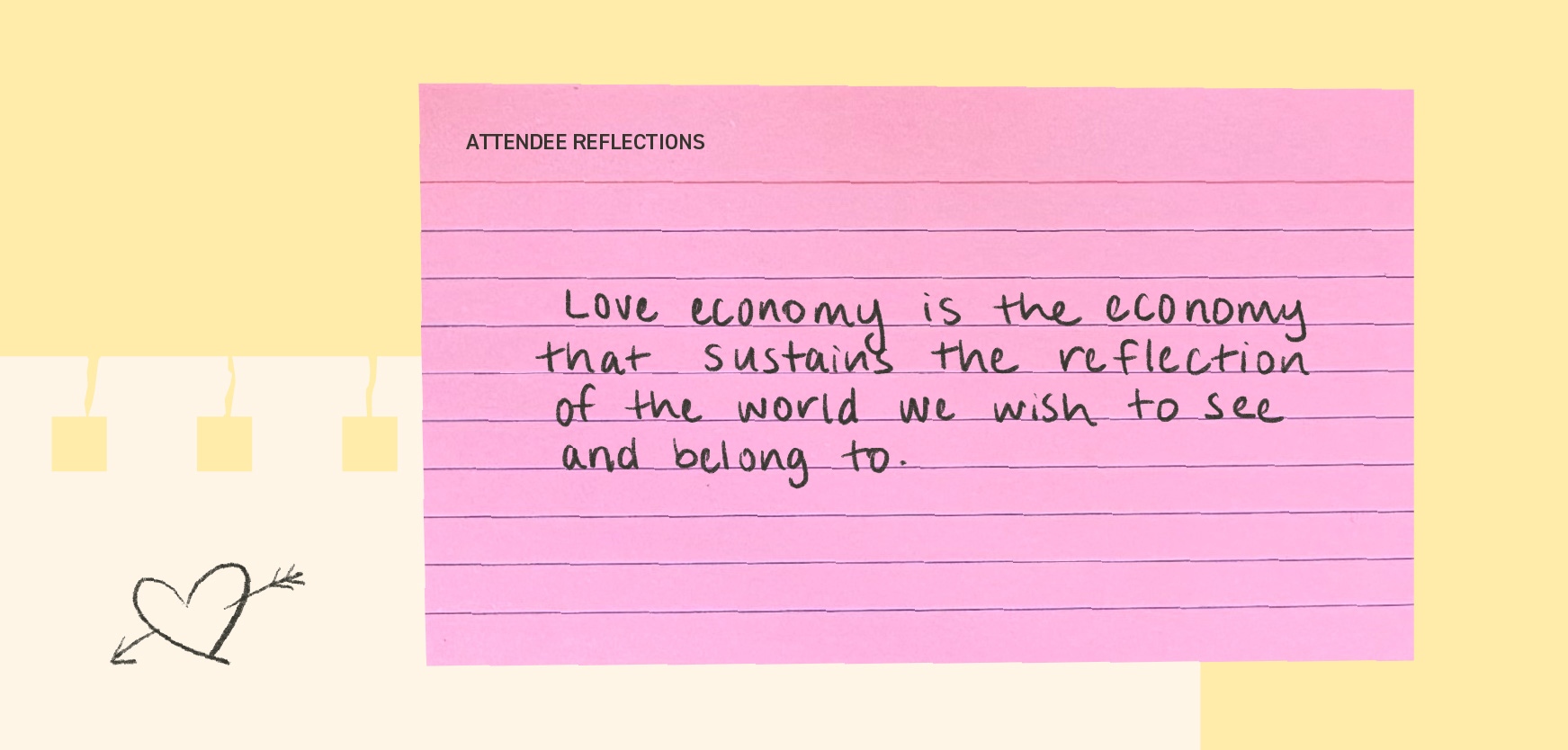
Rev. Bri-anne Swan opened with a reframing of love itself. Drawing on the concept of agape, she reminded us that this is not sentimental affection: “agape is the love that transcends everything.”
In the context of food justice, that transcendent love becomes practical. At East End United Regional Ministry, Nourish East End serves roughly 600 people each week through a market-style food bank. The choice model is intentional. Agency matters.
“We work really hard to incorporate the wants, the needs, the opinions, the ideas of our volunteer base into how we run.”
More than half of those volunteers also access the food bank. The line between giver and receiver dissolves. The system bends toward mutual aid.
And yet, Swan was clear about structural friction. “Our buildings aren’t designed for the purpose that they are meant for now.” Gothic Revival churches were not built to move pallets of food or create dignified circulation flows for hundreds of weekly visitors. Care has outgrown its containers.
She also named the hidden labour within broken systems: “It takes a lot of time and energy to be poor.” Navigating food banks, shelter programs, and services becomes a full-time job layered on top of survival. Poor design does not just inconvenience people. It exhausts them.
A Hidden World of Aging
If food insecurity exposes one gap in the Love Economy, aging exposes another.
Dr. Mark Nowaczynski has spent decades delivering home-based primary care to frail, house-bound seniors in Toronto. His photographs and stories reveal what he calls “a hidden world.”
Canada’s healthcare system was designed in the 1960s, when the population was young. Today, seniors are the fastest-growing demographic. Yet care remains office-based, episodic and siloed. Home visits, he argued, are not nostalgic gestures. “Home visits are a necessity and not just a convenience.”
When care fails to meet people where they live, seniors cycle through emergency rooms and hospitals. Preventable admissions rise. Isolation deepens. Costs escalate. The solution is not incremental. It is structural.
And more explicitly: “We need to reduce avoidable hospitalizations, keep them out of the hospital system, if at all possible, and shift the focus of care back into the community, and rethink our system.”
Rethink our system. That is design language.
The implication is clear. Healthcare must be redesigned around life patterns, not institutional convenience.
Dignity by Design
Ryan Donais brought the conversation to housing and homelessness, speaking from lived experience in the shelter system. His guiding principle is simple.
Current shelter systems often work against that principle. Large dormitory-style rooms, stacked bunk beds, no privacy, no ownership. Function over humanity. “Housing needs to be designed in a dignified way.”
Through tiny homes and micro-apartment models, Donais is testing alternatives that prioritize privacy, safety and autonomy. Even small shifts matter. A locking door. Solar heat. A space to sleep without fear.
He also challenged large-scale clustering models. “When you put a lot of the same type of people in one area, you’re going to have a problem.”
Urban design decisions ripple outward. Concentration without integration breeds instability. Smaller, distributed models offer a different logic, one aligned with community rather than containment.
Life at the Centre
Which brings us to design. Across all three domains — food, healthcare, housing — a pattern emerged. Our systems were built for efficiency, hierarchy and control. They were not built for interdependence.
The Love Economy asks a harder question still. What would change if care were treated as infrastructure rather than charity?
What would it mean to design explicitly for care? Not as an afterthought. Not as a CSR slide. But as a core design principle. If dignity were a design requirement, not an afterthought? If time, energy and cognitive load were treated as scarce resources to be protected?
In many ways, the panelists are already designing differently. They are shifting focus back into communities. They are reducing friction. They are centred around lived experience.
The work is not abstract. It is spatial. It is procedural. It is systemic. And it reminds us that design is not just about creating new things. It is about redesigning the conditions that shape how we live.
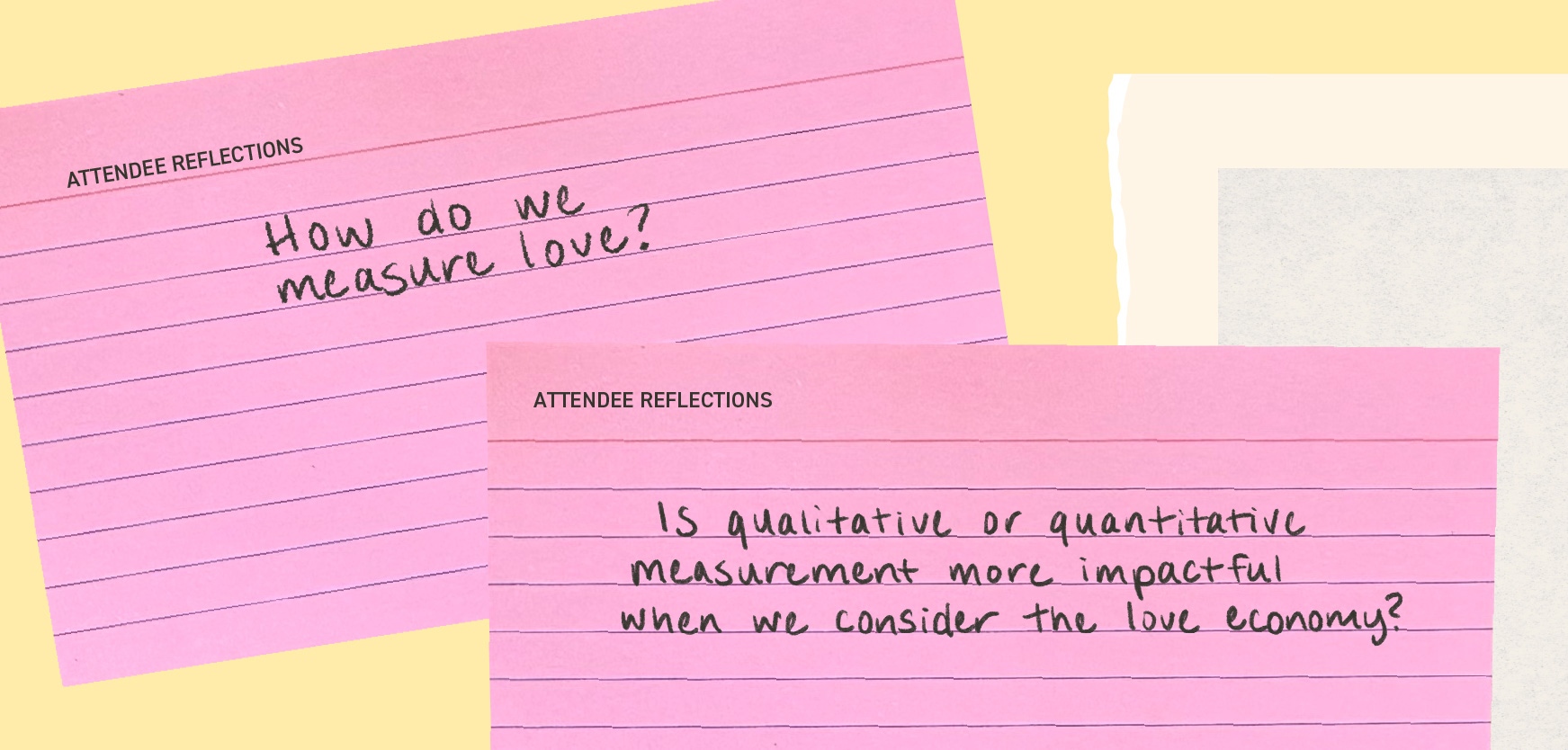
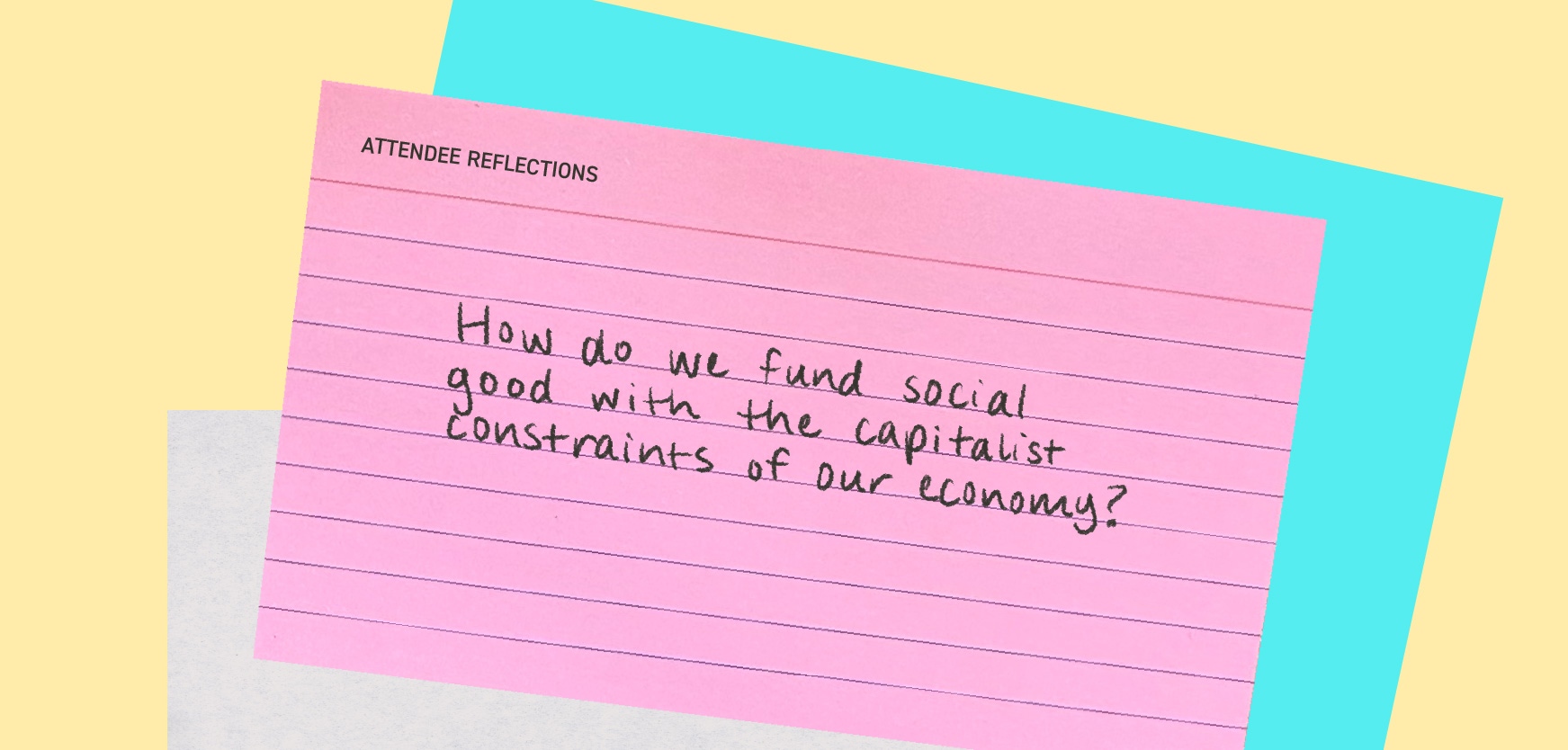
If the Love Economy sounds soft, the conversation proved otherwise. Care is structural. Dignity is designed. Systems can either conserve human energy or drain it. For designers, the challenge is not simply to improve services but to rethink the conditions that shape daily life. When we design with care at the centre, we do more than solve problems. We help build systems that allow people to thrive, one food line, one home visit, one tiny house at a time.
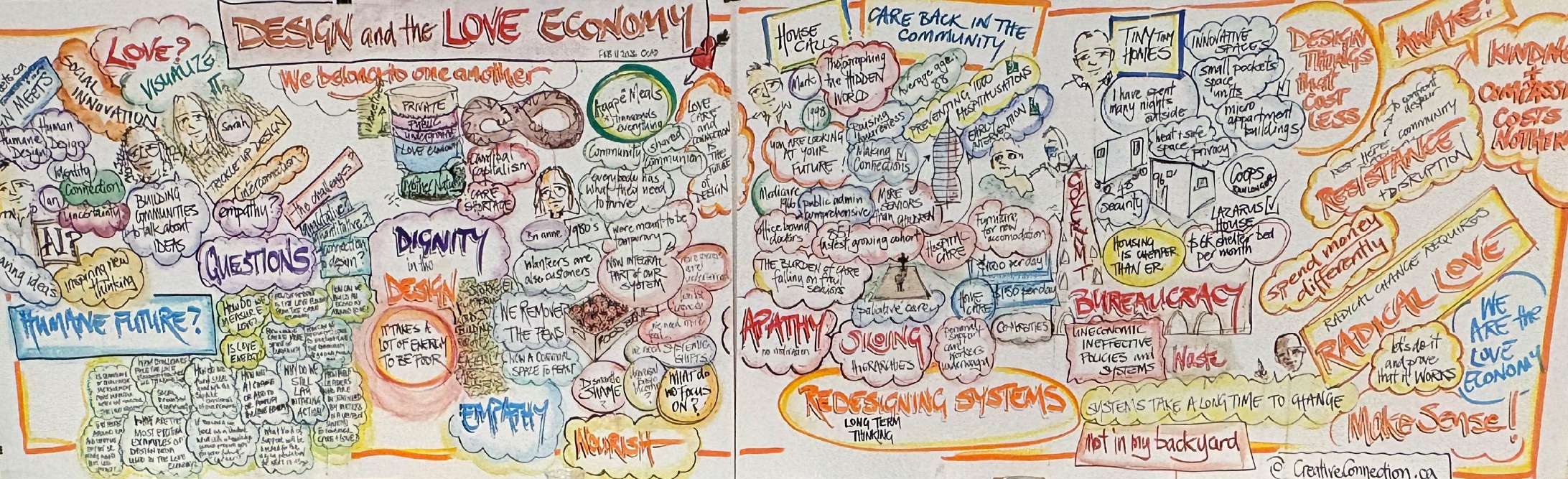
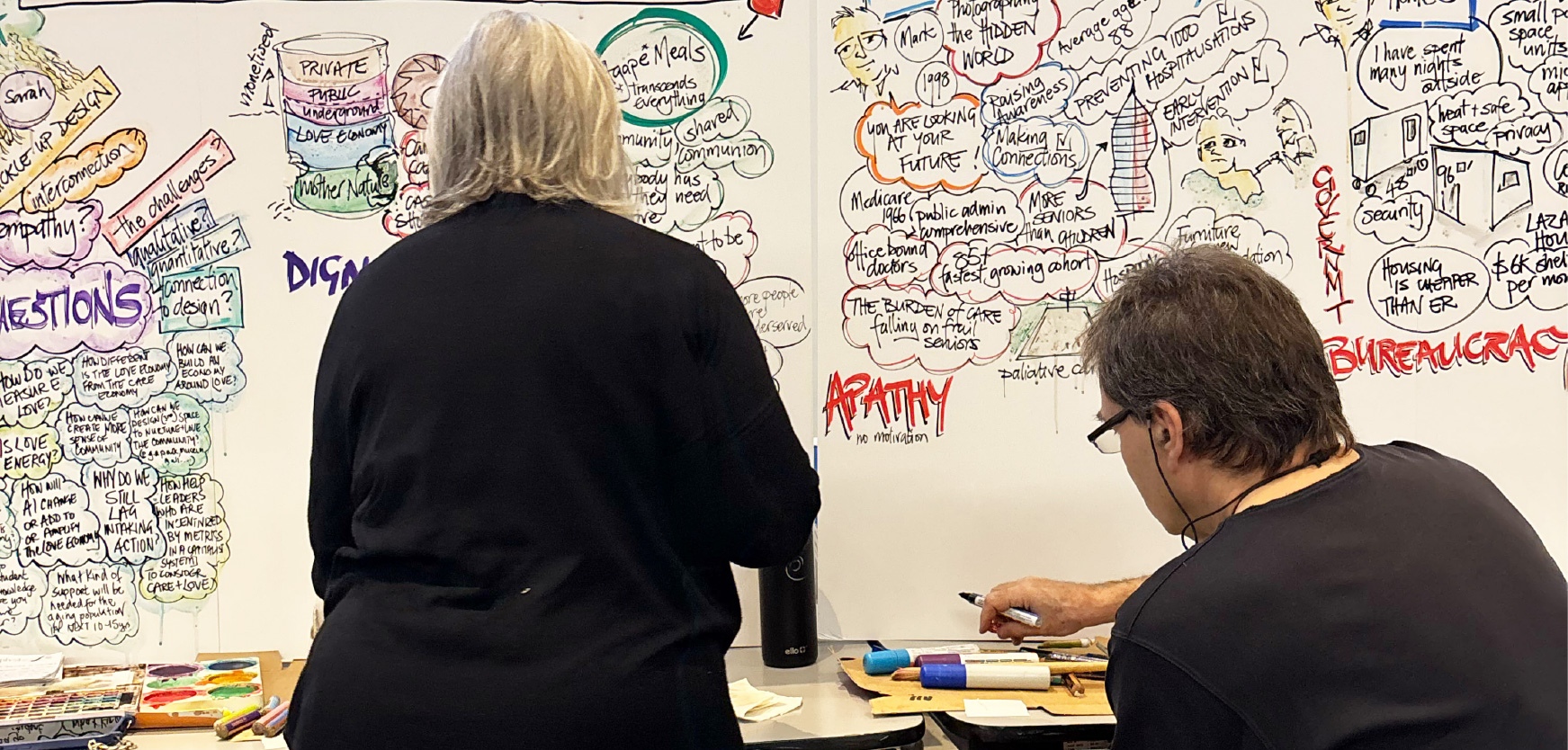
The final visualization by the CreativeConnection team.
—
About Design Meets™
Proudly sponsored by Pivot Design Group, DesignMeets is a series of social events where the design community can connect, collaborate, and share ideas. Join us at a DesignMeets™ event to network, learn, and be inspired.
Sign up for our newsletter to stay in the loop.
Sponsors