Highlights

Faster isn't always smarter.
AI can put design workflows into overdrive. But churning out more options doesn't necessarily produce better decisions.
The first rung of the career ladder is looking decidedly wobbly.
As AI takes over entry-level tasks, educators and employers must rethink how emerging designers develop their skills and professional judgment.
The real value of design isn't always what gets delivered.
Critical thinking, contextual understanding, ethical responsibility and collaboration separate professional design from simply producing a polished result.
Making still matters. A lot.
An LLM can conjure convincing images in seconds. But understanding materials, mastering techniques and knowing how things actually work remain essential.
Design has a new client: itself.
The profession needs to rethink how it educates, mentors, operates and makes the case for its value in an AI-powered world.
Redesigning Design: The Profession Meets Its Next Big Brief
Design has always had a complicated relationship with technology. From the printing press to CAD software, new tools have reshaped how designers work, what they create and what clients expect.
Artificial intelligence is the latest arrival. And it's certainly not making a quiet entrance.
But is AI fundamentally changing design practice? Or is it forcing designers to reconsider what makes their work valuable in the first place?
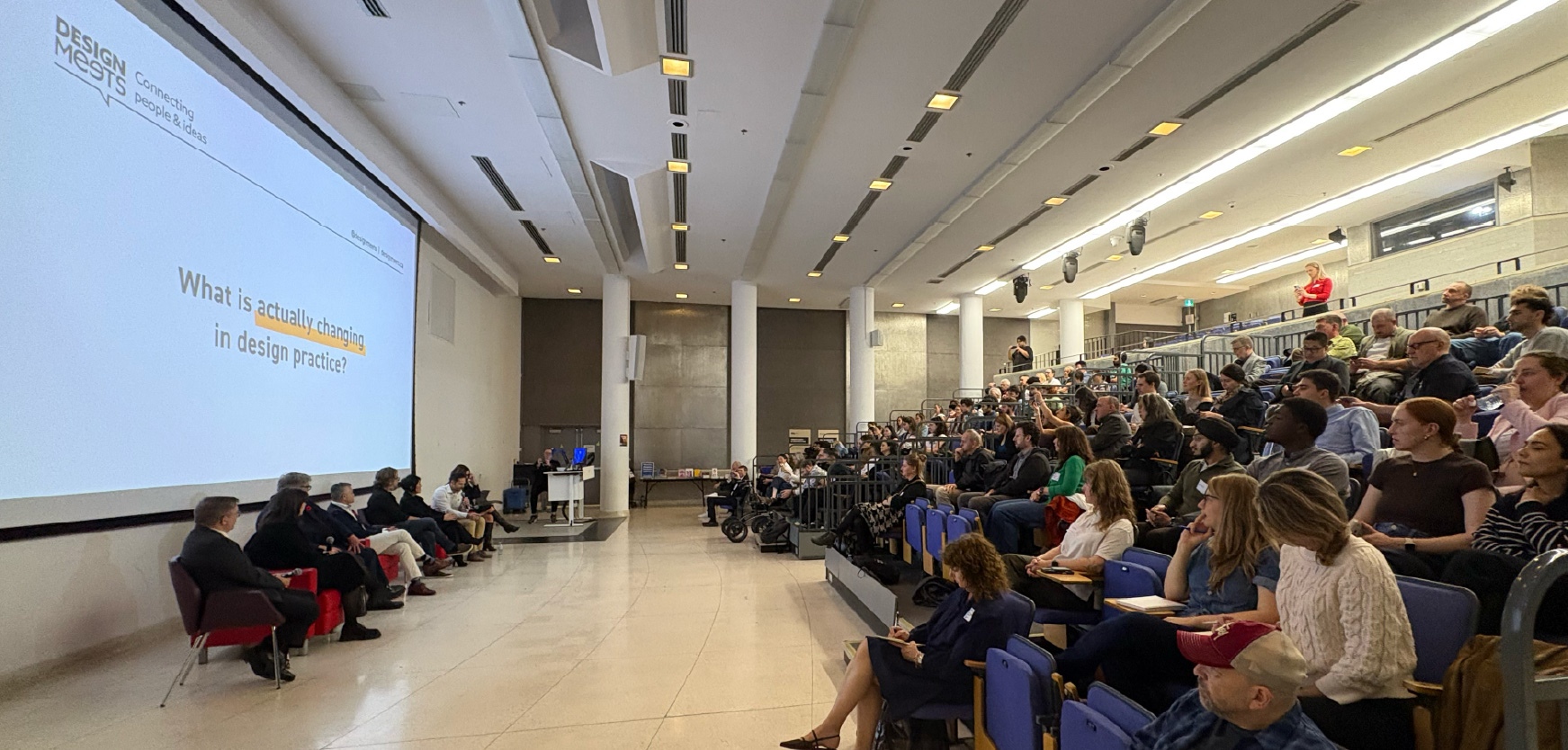
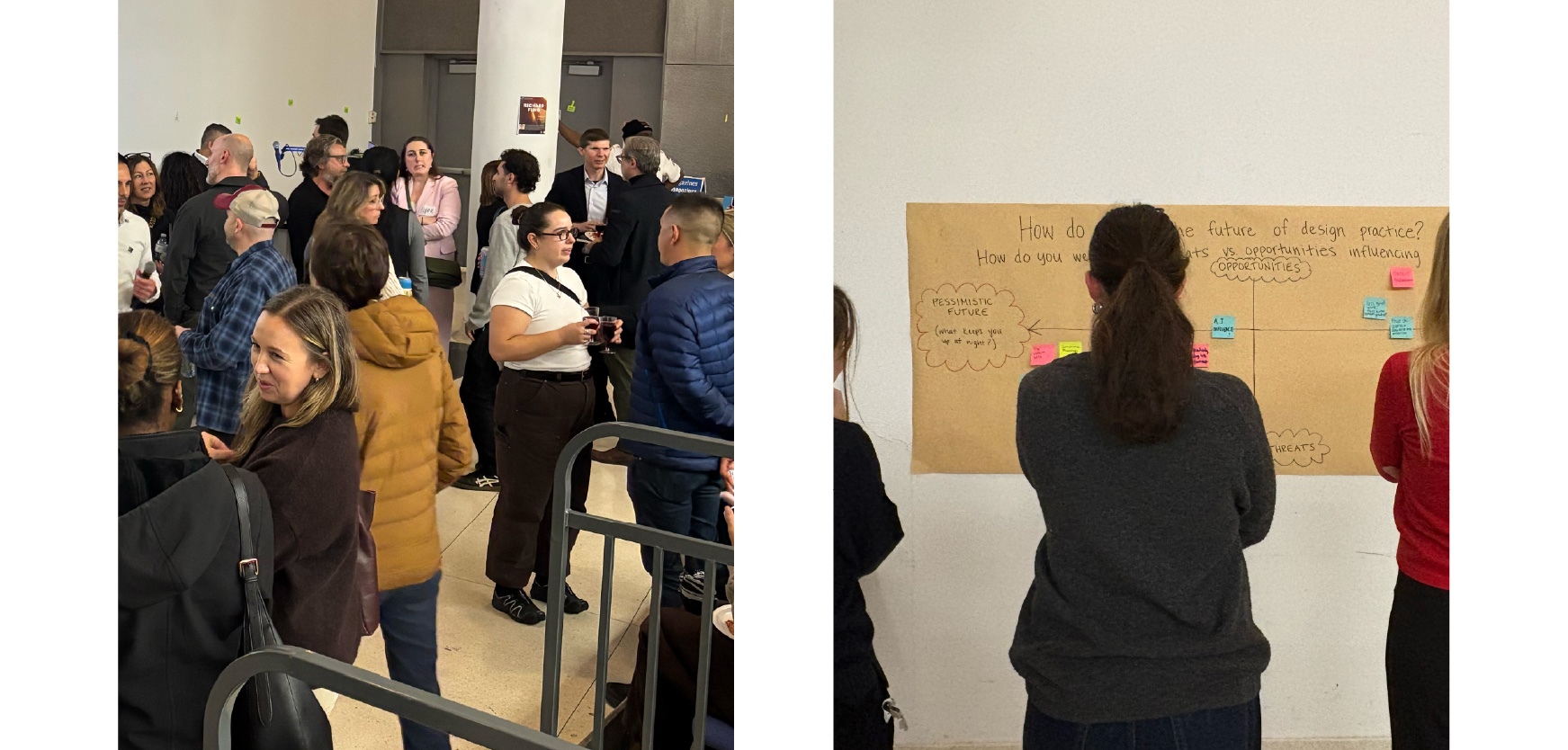
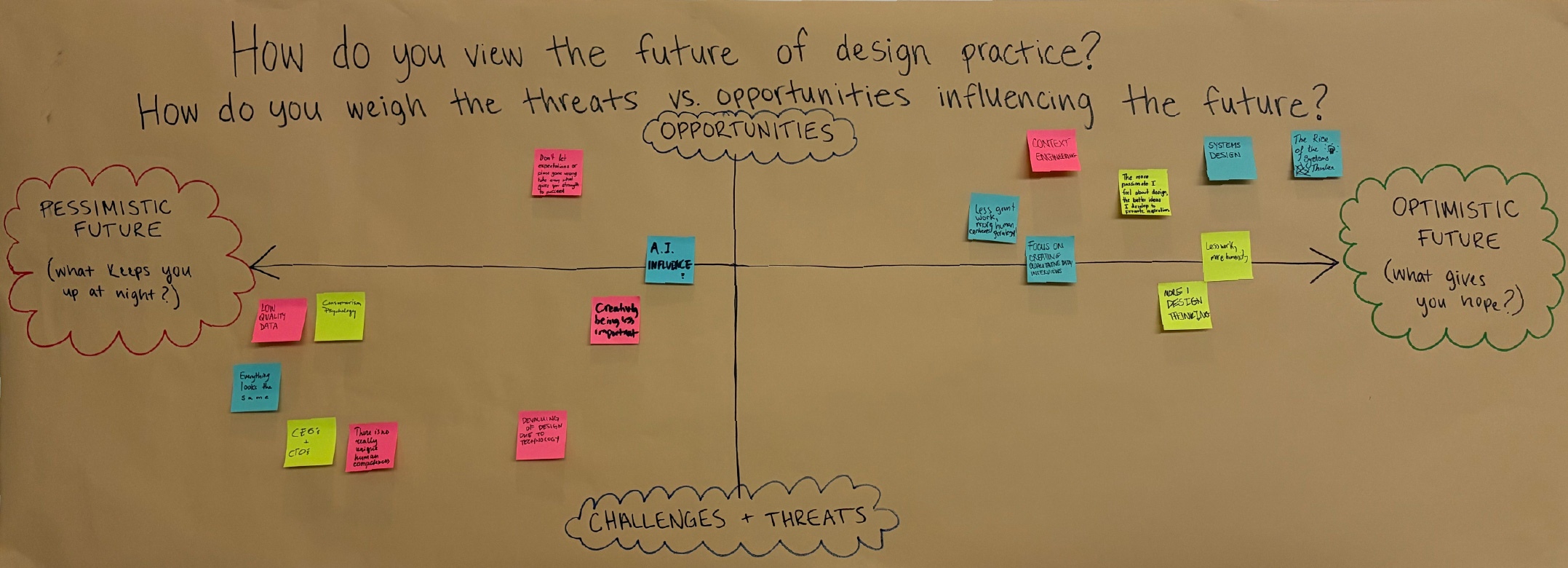
These questions brought designers, educators and industry leaders together at OCAD University for The Redesigned Practice, a DesignMeets event presented in collaboration with the Design Industry Advisory Council (DIAC).
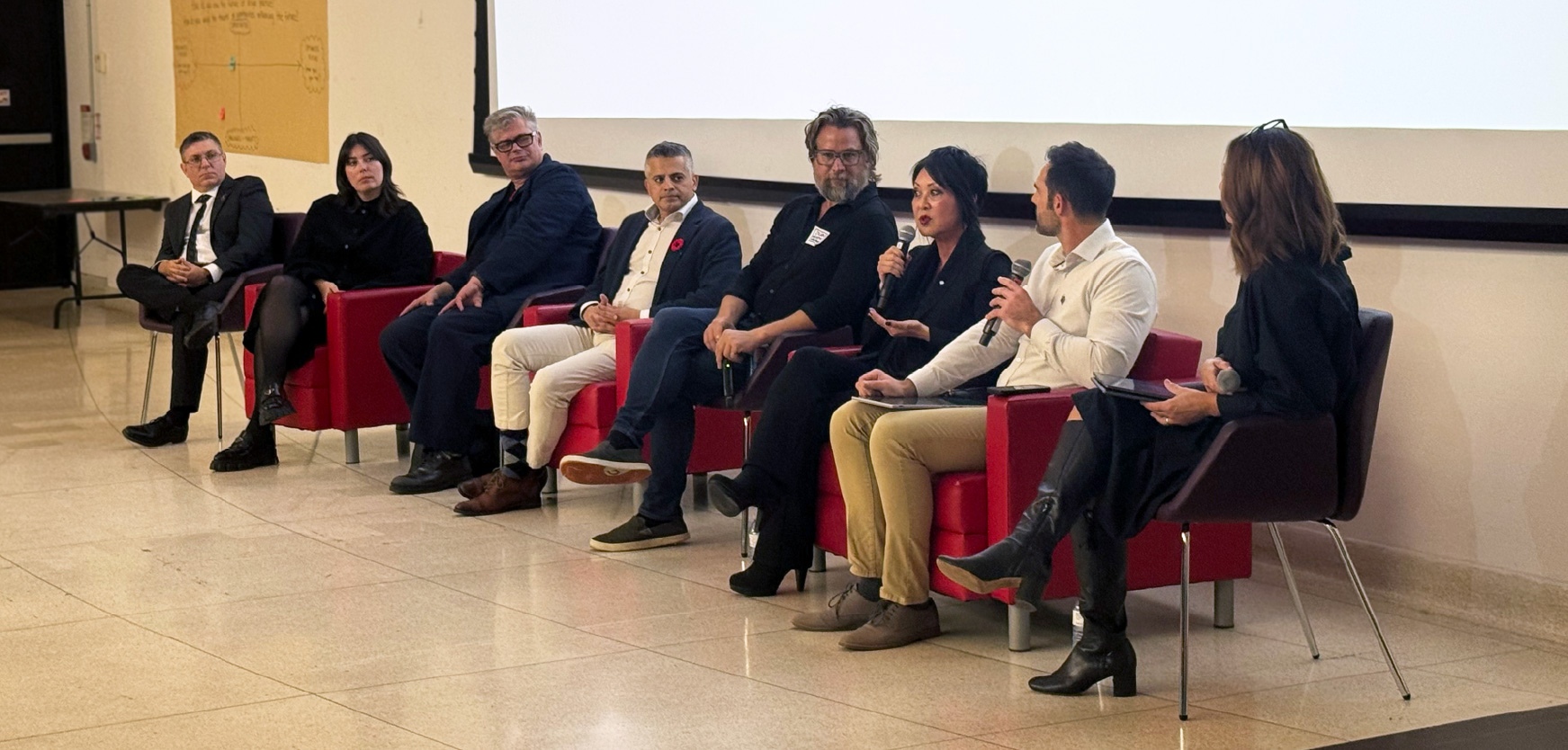
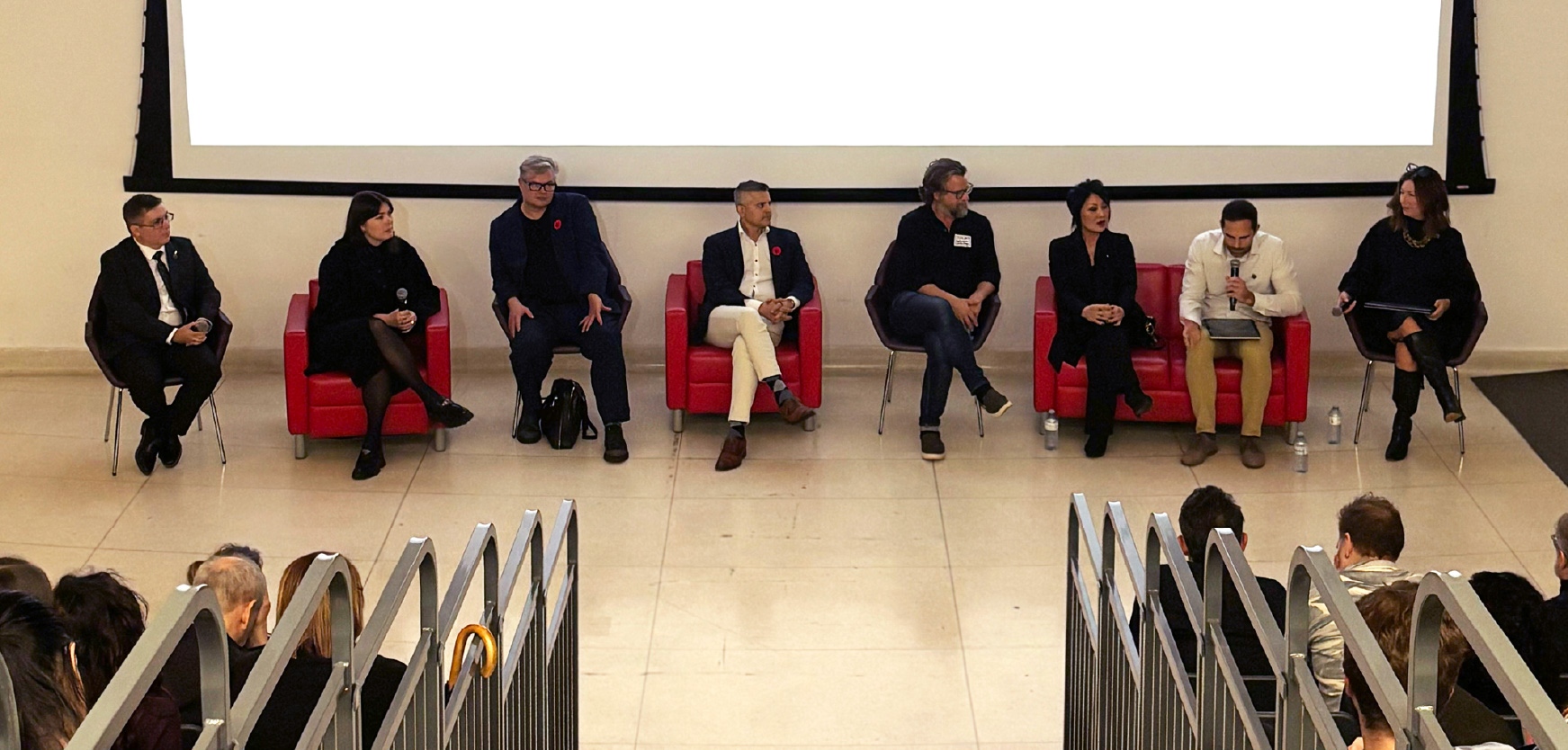
The evening featured research presentations by Jacob Kessler and Tim Haats, followed by a multidisciplinary panel discussion spanning graphic, industrial, fashion, architectural, landscape and urban design.
Different disciplines. Different perspectives. And no shortage of opinions.
But one question kept resurfacing: When technology makes producing design easier, what becomes more valuable about being a designer?
The trouble with making everything easier
AI can generate concepts, produce images, automate repetitive tasks and put entire workflows into overdrive. Good news for designers juggling tight deadlines, demanding clients and the occasional impossible brief.
But speed comes with complications.
Tim Haats, an assistant professor at Carleton University, presented research exploring AI's impact on professional design practice. His findings suggest AI isn't simply another shiny tool in the designer's toolbox. It's accelerating changes in how designers work, how clients perceive their contributions and how the profession defines its value.
One concern is that clients may increasingly equate faster production with lower costs, overlooking the expertise behind the work. After all, if something takes five minutes instead of five days, surely it should cost less. Right? Well, not necessarily.
The panel offered different perspectives on AI's practical impact.
Nicola Hamilton, an editorial designer and founder of Issues Magazine Shop, questioned whether AI is fundamentally changing graphic design itself. She suggested it's having a greater impact on activities surrounding the creative process.
Landscape architect Kevin Post offered a more pragmatic example. AI helps him tackle correspondence and repetitive reporting tasks, freeing time for the more demanding aspects of design. Less paperwork. More brainwork. Few designers would object to that trade.
Both perspectives point toward an important distinction: Making something faster isn't necessarily the same as designing something better.
Who's going to teach the next generation?
Perhaps the evening's most pressing concern wasn't what AI might do to experienced designers. It was what happens to those just entering the profession.
Jacob Kessler presented findings from international research conducted with design educators and practitioners through workshops associated with the Cumulus network. One emerging concern was the vanishing rung: the potential disappearance of entry-level work that traditionally helps young designers find their feet. Research, drafting, revisions and production tasks may seem routine. Occasionally tedious. Sometimes downright thankless. But they're also how designers learn to solve problems, respond to criticism and develop professional judgment.
If AI takes over these responsibilities, where will tomorrow's experienced designers come from? It's quite the conundrum. We're asking emerging designers to become better strategic thinkers while potentially removing the experiences that teach them how to think strategically.
"AI can increasingly do or accelerate many tasks, but those tasks are also how we learn the profession. You make a rough version; someone with experience challenges it. You fix it slowly. You develop your own [eye], and if we remove the entry level work without replacing the learning it provides, we create a real problem." –Jacob Kessler
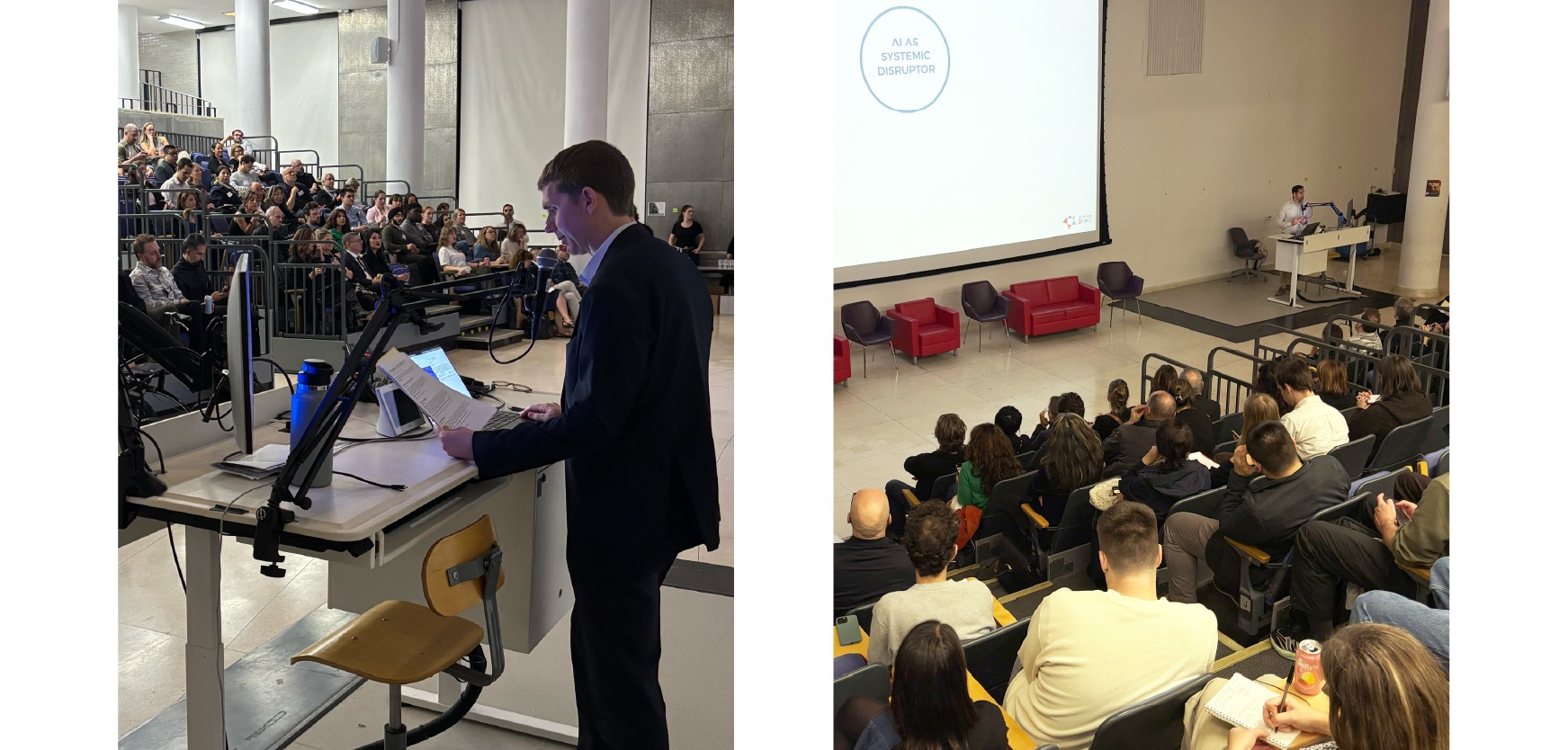
Lesley-Ann Noel, Dean of Design at OCAD University, addressed the broader implications for design education.
As the university celebrates its 150th anniversary, it's examining how to prepare students for a profession in constant transition. Her emphasis was on developing judgment, curiosity, critical thinking, creativity, empathy and ethical awareness, rather than simply mastering the latest technologies. Especially when today's latest technology could be tomorrow's digital antique. The challenge extends beyond universities. Design firms must also rethink mentorship and create opportunities for emerging talent to develop through hands-on experience. After all, experience doesn't arrive with a software update.
The machine can make it. But should it?
AI can generate an impressive-looking building, garment or product in seconds. Whether that design actually works is another question entirely.
Fashion designer Susan Langdon emphasized that designing clothing involves considerably more than dreaming up appealing images. It demands an understanding of materials, pattern-making, fit and the stubborn reality that human bodies come in a variety of shapes and sizes.
Industrial designer Dylan Horvath reinforced this distinction through his experience designing medical devices. His work demands testing, evidence and a deep understanding of the people who will ultimately use a product. A beautiful rendering is all well and good. A medical device that actually works is rather more important.
"To me the biggest function of us as designers... is to understand, comprehend, and present human-centered solutions to a population." –Dylan Horvath
Architect Atif Aqeel brought another essential consideration into focus: accountability. AI may generate options, but professionals must evaluate their feasibility, make informed decisions and accept responsibility for the results. Someone still has to sign off on the building. And preferably before anyone moves in.
These perspectives underscored a recurring theme: design isn't simply about producing something attractive or technically possible. It's about understanding people, navigating constraints and making informed choices.
Technology can support those decisions. It doesn't eliminate the need to make them.
A profession with an identity question
If AI puts sophisticated design tools into almost anyone's hands, what exactly distinguishes a professional designer? The question sparked considerable discussion, although not everyone agreed that AI had triggered a full-blown identity crisis.
Hamilton argued that graphic designers still bring the same fundamental skills to their work: critical thinking, creative problem-solving and an understanding of human behaviour. Others saw an opportunity to elevate design's role beyond producing deliverables.
Chris Hardwicke, Director of Urban Design for the City of Toronto, challenged the emphasis on design as a finished product. He encouraged a broader understanding of design as a collaborative process that connects people, disciplines and complex systems. It's an important distinction. And one the profession has been trying to explain to clients for quite some time.
A finished design might be a building, a product, a garment or a visual identity. But design's real value also lies in the questions asked, the competing interests reconciled and the decisions made along the way. AI may make the finished product easier to produce. It could also make the thinking behind it more valuable. The challenge is ensuring clients understand that difference.
Because if everyone can generate something that looks designed, designers will need to work harder to explain what professional design actually delivers. And perhaps spend a little less time defending why it costs what it costs.
Designing what comes next
Despite the concerns, the evening wasn't simply a spirited defence of human creativity against the advancing machines.
Some participants welcomed AI's ability to banish repetitive work and expand creative possibilities. Others questioned the industry's enthusiasm for adopting technology without clearly defining its purpose or considering its environmental and ethical implications.
There was no universal agreement on how much AI will change design, or how quickly. Of course, a room full of designers reaching instant consensus on the future of their profession would have been deeply suspicious.
But the conversation revealed something more useful than agreement.
Designers have an opportunity to challenge established practices, reconsider how they develop talent and make a stronger case for the value they bring to increasingly complex problems. That may demand new skills, new business models and new ways of collaborating. It will certainly require curiosity, critical thinking and a willingness to question assumptions. Appropriately enough, those are qualities designers have been cultivating for generations.
Perhaps the future of design isn't simply about learning to work with AI. It's about becoming more deliberate about why we design, who we design for and what we hope to accomplish.
And that's a brief worth spending some time on.
About DesignMeets™
Proudly sponsored by Pivot Design Group, DesignMeets is a series of social events where the design community can connect, collaborate, and share ideas. Join us at a DesignMeets event to network, learn, and be inspired.
Sign up for our newsletter to stay in the loop.
Sponsors